
View More
Articles
- When To Add 811 Reminders To Safety Products
- What Are Low-Temperature Adhesives?
- Custom Solutions For Transmission Tower Marking
- String, Wire, Or Nylon Cable? Choose The Right Tie
- The Best Materials For Fleet Marking
- The Most UV-Resistant Label Material
- 6 Ways To Make Your Spec More Competitive
- Best Practices For Substation Marking
- Understanding OSHA 1910.269 Tagout Rules
- Adhesive Options For Painted Metal Surfaces
- A History of Zap The Safety Bird
- Requirements Of Photovoltaic System Marking
- 10 Design Tips For LOTO Tags
- 8 Design Tips For Transformer Labels
- Designing Multilingual Messages: What's Required?
- Correctly Specify ANSI Safety Colors
- Your Safety Labels Have A Shelf Life
- Elements Of A Strong Safety Message
- Using Retroreflective Materials For Signs & Labels
Material Science Content
5 Label Material Myths, Debunked
When starting a labeling project, navigating the different label materials and features can be a challenge. On top of the seemingly endless options, widespread misunderstandings can also deter you from finding the right materials. This could lead to choosing labels that are over-engineered, expensive, or destined to fail in the field.
To help you find the right solution for your application, we’ll separate fact from fiction. Here are the top five claims about label material construction that we hear out in the field, and why you can safely consider them untrue.
Myth 1: When in doubt, use a low-temperature adhesive
The Misconception: At first glance, the benefits of using a low-temperature adhesive for any outdoor application seem to be a no-brainer, especially in areas with fluctuating temperature extremes. It makes sense: if you expect cold weather, use a cold-weather label… especially when you consider the fact that the outdoor lifespan is comparable to a standard adhesive.
The Fact: Low-temperature adhesives are specialized tools, not all-purpose solutions. They are not a good choice for applications in warmer weather. Higher temperatures can cause the adhesive to bleed (or ooze) from the edges of the label, creating a sticky mess and compromising the bond.
Also, there are not a lot of material options for low-temperature adhesives. The costs can be difficult to justify, especially if the application does not require a higher tolerance for lower application temperatures.
The Bottom Line: Don’t waste money on unnecessary features. A standard adhesive is the more reliable and cost-effective choice, unless you are planning to apply the label in freezing conditions.
Myth 2: A label’s application temperature and service temperature are the same
The Misconception: You can use the terms interchangeably.
The Fact: The application and service temperatures of a label are not the same! Confusing them can lead to label failure.
Application temperature is the recommended temperature range that the adhesive be applied to achieve adequate adhesion. In most cases, the application temperature listed will be the minimum application temperature. The minimum application temperature is the lowest point at which your label can adhere. If applied at a lower temperature than that recommended minimum, the adhesive will not set, and the label will not stick.
Service temperature is the temperature range at which the adhesive will continue to perform without failure. Service temperature is a range, and the application temperature is somewhere within it.
As long as the temperature stays within the service temperature range, the label will last over its useful service life without affecting adhesion.
The Bottom Line: Application temperature is the temperature of the surface when the label is first applied. Service temperature is the full range the label can withstand after it has been applied. Knowing the difference between the two will allow you to choose your label material more cautiously, overall saving you money and time in the field.
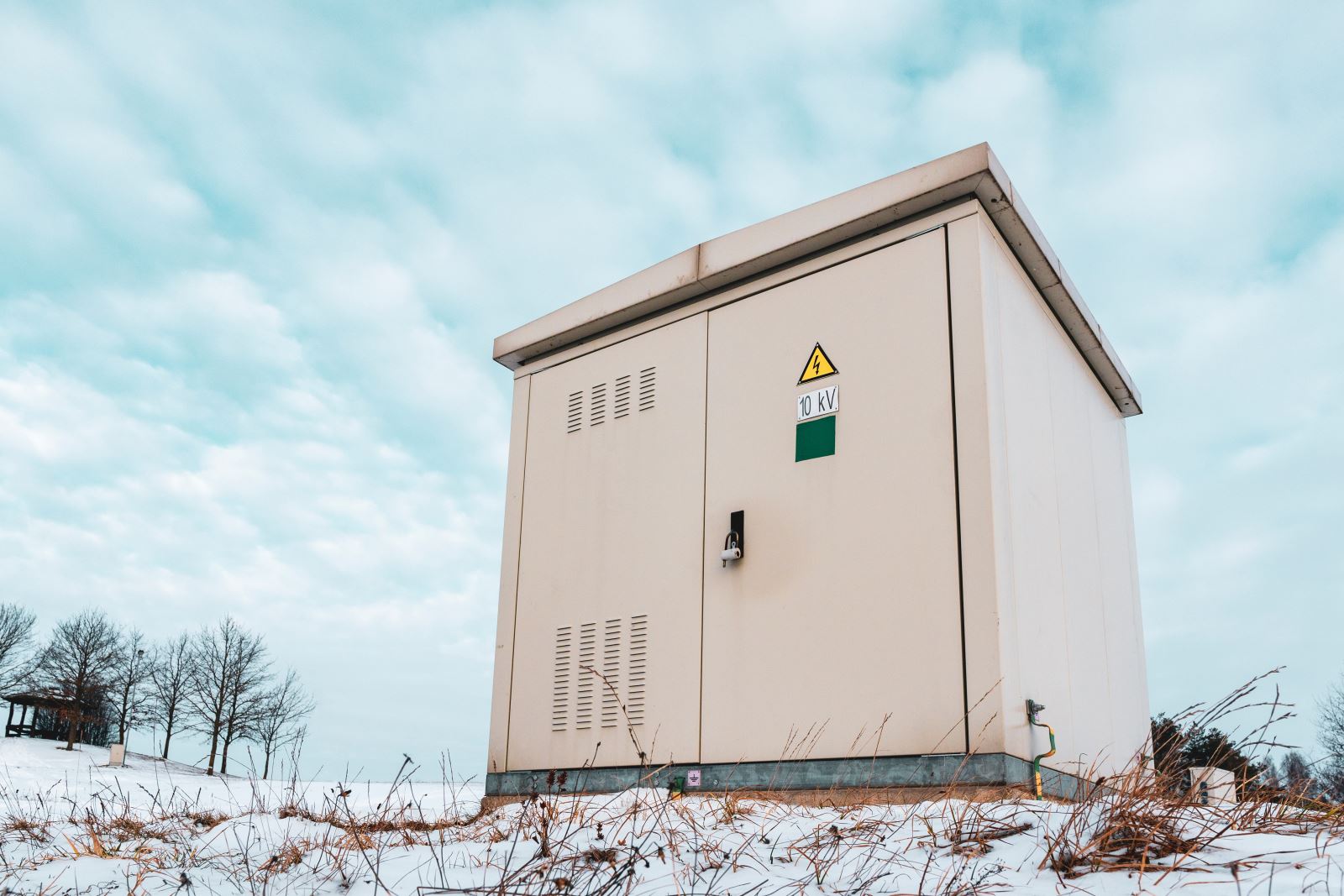
This padmount transformer needs to withstand cold temperatures and snow. Any labels used on the transformer should, therefore, have low service temperature ranges. If the labels were applied in these conditions, they should also have low application temperatures.
Myth 3: Vinyl is vinyl is vinyl
The Misconception: All vinyl is created equal—so if your specification calls for vinyl labels, no need to think too hard about it.
The Fact: There are two basic types of vinyl: calendered and cast.
Calendered vinyl is stretched and rolled, and cast is poured into a mold. It is a cost-effective option for simple applications, as well as low-temperature label applications.
Cast vinyl is a premium-quality vinyl, with roughly double the lifespan of calendered vinyl thanks to differences in their manufacturing processes. Because there isn’t much stress put on cast vinyl during manufacturing, it will hold its shape/size longer than other vinyl labels.
The Bottom Line: Calendered vinyl labels are a cost-effective option, but they will have a shorter lifespan. Cast vinyl labels have an expected outdoor lifespan of 15 years and are an ideal choice for application on curved or textured surfaces.
Myth 4: The tackier an adhesive feels, the better it will stick
The Misconception: An adhesive that feels sticky will always have a stronger hold.
The Fact: A softer adhesive tends to feel like it should be a better option, and sometimes it is! Softer adhesives are better on certain plastics, such as polyethylene or other slicker plastics. They offer excellent quick-stick properties and set up faster. More rigid adhesives, conversely, tend to have higher peel and shear values, meaning they will reach ultimate adhesion better than softer options. This means that after they have fully cured, they form a much more permanent bond and will be harder to peel or shear off of the surface they’ve been applied to.
The Bottom Line: Providing as much detail as possible about your application’s surface helps us determine the best option.
Myth 5: Adhesive thickness does not matter
The Misconception: As long as there’s adhesive, the label will stick to any surface.
The Fact: Substrates that have a lot of texture generally require a thicker adhesive to adhere correctly to the surface. More viscous (thicker) adhesives can fill the high and low points of a surface, forming the necessary bond to ensure the label adheres properly.
It is true that flat, smooth surfaces without textured points do not necessarily require a thicker adhesive.
The Bottom Line: The thickness of your adhesive should make sense for the substrate material or texture that you plan to apply the label.
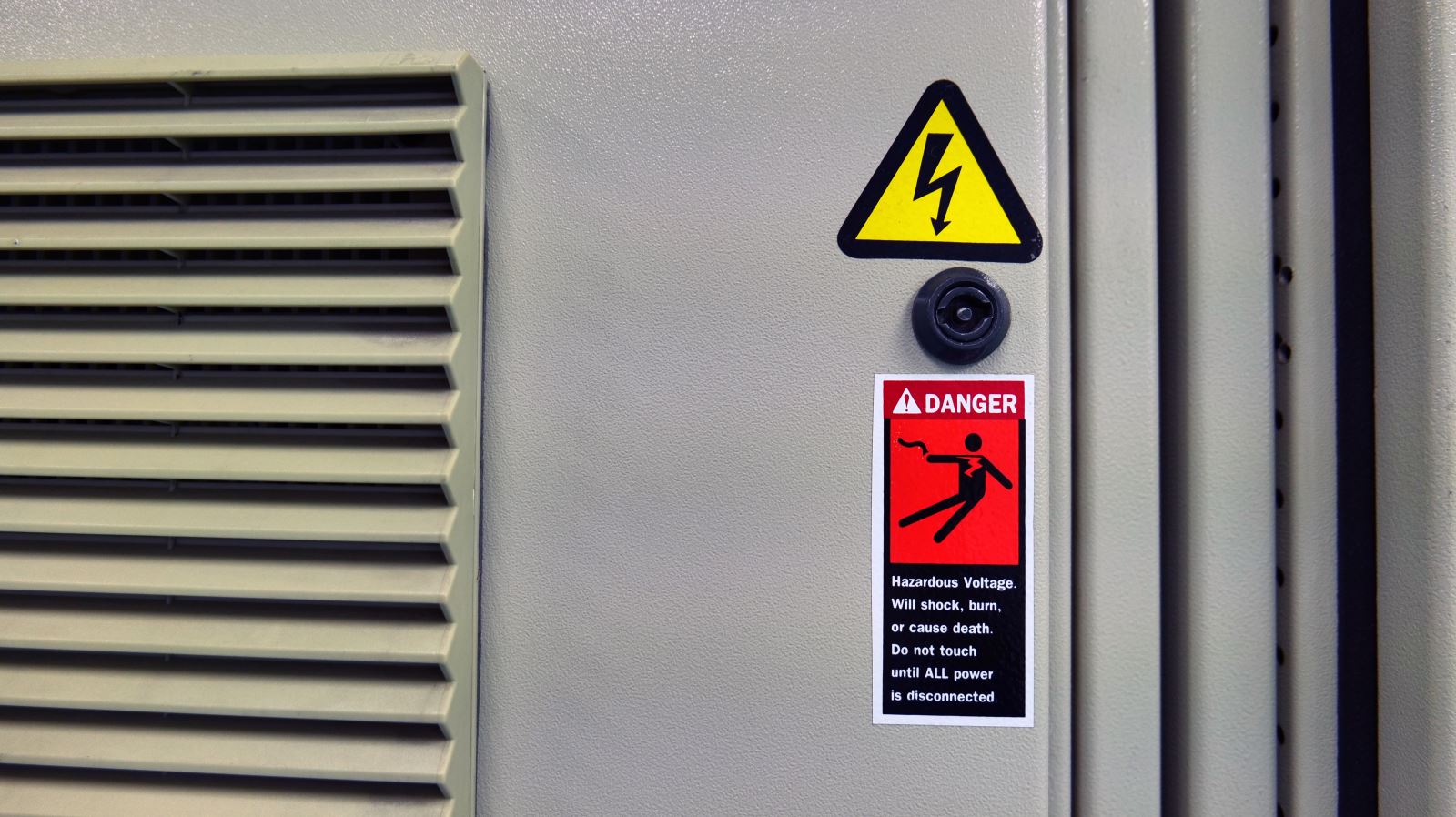
These labels have been applied to a lightly-textured surface. In order to bond properly, these labels should have a thicker adhesive.
Work With Electromark Label Experts
A common theme in all of the points listed above is the importance of understanding your application and label durability expectations.
Electromark offers a wide variety of materials, but the right material construction is unique to the customer’s application-specific needs. Before getting started on your next labeling project, ask as many questions about outdoor-durable label material characteristics and how they relate to the desired product performance. We’re committed to finding a solution that makes sense for your application.